
Cheaper to salvage 2TB laptop HDD from Seagate portable HDD


As widely discussed since 2014, this trick still works in 2016, which is insane price arbitrage if you ask me.

Bought a 2TB Seagate Expansion Portable HDD for $117. The 2.5" SATA HDD inside, if purchased as a stand-alone unit, costs upwards of $165.


Prying this open requires a thin sturdy Swiss army knife blade (or something equivalent). A guitar pick was not rigid enough to do the job for me.


The way these newer casings are designed, the plastics catches on the end that you start prying are bound to break.


The other end should be OK if you are careful enough.


I didn't need the casing anyway, so I didn't care. But you can always put it together with a little creative application of black electrical tape, so I don't think it's too much of a problem, unless you are really picky about cosmetics.

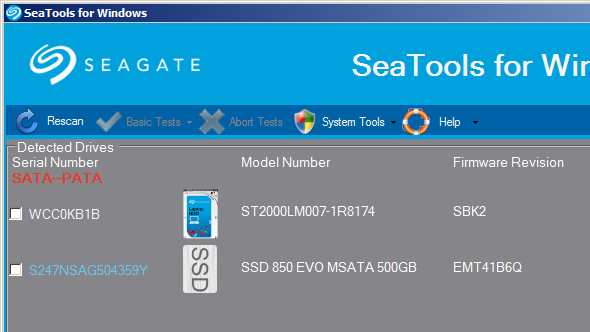
After putting it into my laptop, SeaTools detects the HDD as ST2000LM007. Not much of a surprise here.

Pros:

  • $50 savings for 5 minutes' work
Cons:
  • You can never be 100% sure which brand/model HDD you are getting inside
  • You void the warranty
This approach is not for everyone, but the bang-for-buck ratio is really high for the adventurous to take a dive.

Comments

Popular posts from this blog

Hacking an analog clock to sync with NTP - Part 5

This is how it looks after I have put everything together. The Arduino sketch is available here . The 2 jumper wires soldered to the clock mechanism are connected to pins D0 and D1 on the ESP-12 (in any order). When the device first boots up, it presents an access point which can be connected to via the PC or smartphone. Once connected, the captive portal redirects the web browser to the configuration page:     A custom field has been added to the WiFi configuration page to enter the current clock time in HHMMSS format. Try to set the clock time to as close to the current time as possible using the radial dial at the back of the clock so the clock will have less work to do catching up. In the config page, the HTML5 Geolocation API is also used to obtain your current location (so if your web browser asks if you would like to share your location, answer "yes"). This is then passed to the Google Time Zone API to obtain the time and DST offset of your time z...

Samba Server on Android Media Player

I recently bought an Android-based media player: the Minix Neo X5 . It came with the original firmware , which had issues playing the MTS video files that my digital camera produces, so I promptly upgrade to the latest ver 011 of the firmware. That solved the MTS playback issue, but the firmware itself was not very stable and hang quite frequently. So I promptly installed Clockmod Recovery , followed by the CWM version of Finless V1.2b . Now everything is fast and stable! Next, I needed an SMB server on the media player so that I can manage its content from other PCs in the house. Surprisingly this turned out to be harder than I thought given the hackish nature of Android. SambaDroid was quite easy to install and work with. Unfortunately, it does not support files > 2GB in size. This is quite a major limitation given than many media files these days are > 2GB in size. Samba Server turned out to be a dud. Despite having root access, I couldn't set it up so that it is a...

Adding "Stereo Mixer" to Windows 7 with Conexant sound card

This procedure worked for my laptop (Thinkpad E530) with a Conexant 20671 sound card, but I suspect it will work for other sound cards in the Conexant family. I was playing with CamStudio to do a video capture of a Flash-based cartoon so that I can put it on the WDTV media player and play it on the big screen in the living room for my kids. The video capture worked brilliantly, but to do a sound capture, I needed to do some hacking. Apparently, there was this recording device called "Stereo Mixer" that was pretty standard in the Windows XP days. This allowed you to capture whatever was played to the speaker in all its digital glory. Then under pressure from various organizations on the dark side of the force, Microsoft and soundcard makers starting disabling this wonderful feature from Windows Vista onwards. So after much Googling around, I found out that for most sound cards, the hardware feature is still there, just not enabled on the software side. Unfortunately, to...